
Sex Offender Checks in Bond County
The Illinois State Police operates the Illinois Sex Offender Registration Information Website, commonly called I-SORT. It is the central public channel for a Bond County sex offender search. The database is described as updating daily, yet the displayed information still depends on reports from registrants and registering agencies. Bond County has no separate public county registry or sheriff map documented in the official sources.
Begin with the narrowest reliable identifier. A full name is useful for a person search, while the county, city, ZIP, address, and map controls are better for community awareness. Similar names, past addresses, and status changes can complicate matching. A registry result should therefore be checked against the photograph, physical descriptors, birth year or age information, address, offense details, and registration status before drawing a conclusion.
The ISP system is purpose-specific. It is not a complete Bond County criminal history and does not replace a court disposition. A profile reflects statutory registration and public-notification data, while the Circuit Clerk holds the criminal case file. The public registry also may show status terms such as incarcerated, out of state, or homeless. Read those terms with the listed verification information instead of assuming that every profile supplies a conventional Bond County street address.
Illinois does not reduce every duty to a simple three-tier label. Registration length can depend on the offense, classification, adjudication, and statutory rules. Some duties run for ten years and others for life. Noncompliance can add a ten-year extension in circumstances described by ISP. Use the live profile and current statute rather than calculating an end date from the conviction year alone.
Selecting Bond County in I-SORT
The county dropdown is the cleanest way to isolate records associated with Bond County. A search can then be narrowed by Greenville, Pocahontas, or Mulberry Grove, but municipal boundaries and mailing addresses do not always describe the same geography. A county search is consequently a useful first sweep, followed by city, ZIP, and map searches around the location that matters.
A zero-result search is not a definitive clearance. Repeat the query with spelling variations and aliases, remove optional filters that may be too narrow, and check the neighborhood map. If the concern involves a recent move, a status discrepancy, or information that appears unsafe or materially wrong, record the profile identifier and contact the registering agency. Do not attempt to investigate at the listed address. ISP, the Bond County Sheriff, or the municipal police department can determine whether a record has changed or whether another agency holds the current registration form.
ISP describes the underlying database as updating daily. Daily updates do not guarantee that every source report reached the system on the same day. For a time-sensitive Bond County question, compare the live profile's last verification details with the registering agency's current information. The official disclaimer also directs users to the source registration form when a displayed entry requires confirmation.
The official ISP registry search presents the live controls and current conditions of use. The captured registry view below helps identify the correct public service before entering personal search terms.
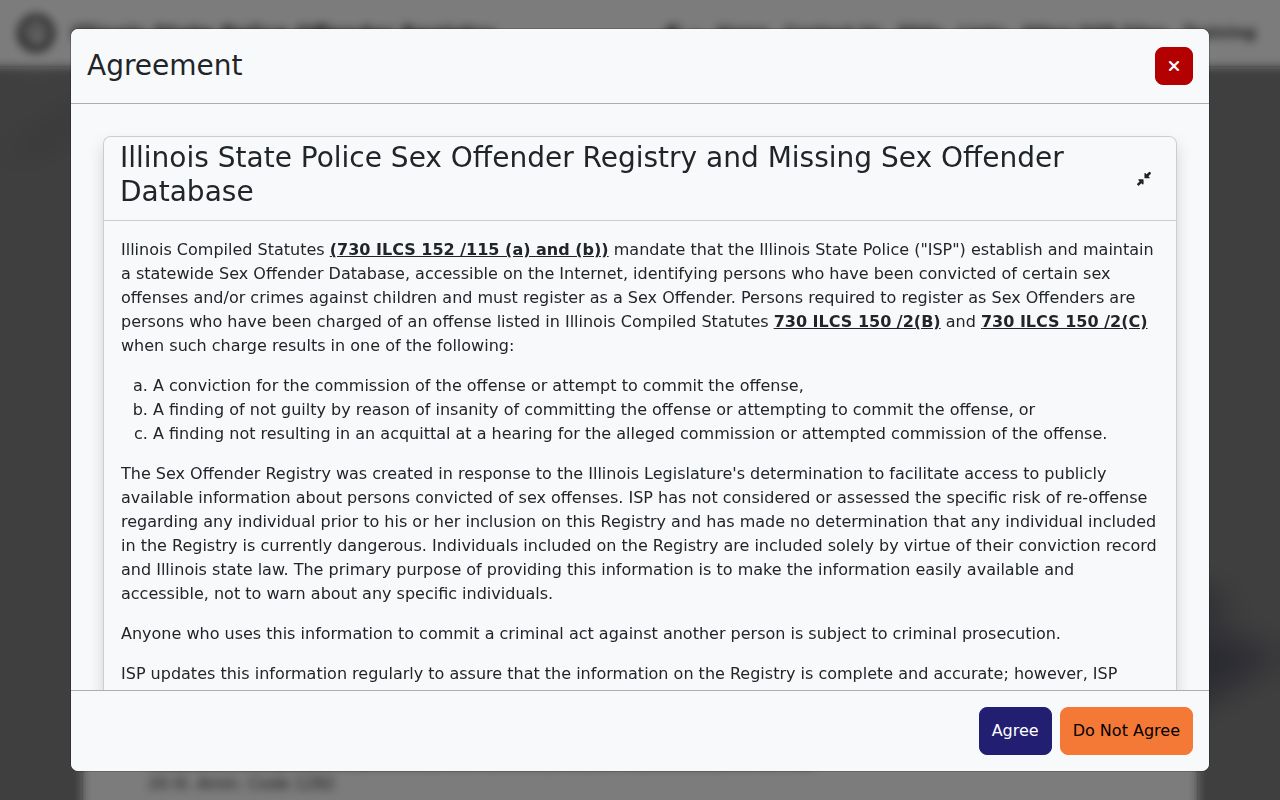
Because the database changes, use the live search rather than treating an older screenshot or saved result as current.
How to Search the Illinois Sex Offender Registry
I-SORT supports person, geographic, and status-oriented searches. Read and accept the conditions before searching, then choose the route that fits the question. The ISP disclaimer stresses that the database is informational, can contain errors, and should not be used as the sole basis for action.
- Open the ISP public registry and review its conditions and disclaimer.
- Search by last name or use Bond County, city, ZIP, address, or neighborhood map controls.
- Compare the result list by name, photograph, location, and physical description rather than name alone.
- Open the profile and read the offense, address, registration term, status, and verification information together.
| Field Label | Type | Required | Notes |
|---|---|---|---|
| Last / First Name | Text | Alternative | First name narrows a surname search. |
| City / ZIP Code | Text or select | No | Useful for a municipality or mailing area. |
| County | Select | No | Select Bond for a countywide result set. |
| Address / Map | Text and map | No | Supports a neighborhood-oriented view. |
| Homeless / Status | Checkbox or filter | No | Finds records that may lack a conventional address or carry a listed status. |
The homeless or status controls are especially important because an address-only query can miss a record without a standard residence. Search by name and county as a second route. A map radius can cross city limits, so a Greenville-centered search may include nearby county locations that a city filter alone would not return.
NSOPW adds a national search when a person or location may cross state lines, but Illinois I-SORT remains the primary source for Illinois profile details.
Mapping a Greenville Neighborhood
For an address-based safety question, a map view often answers more than a city-name list. Enter the Greenville location and inspect the surrounding area, then widen the view if the location sits near a municipal edge. The map indicates reported registry locations; it does not establish where a person is at the moment or predict future behavior.
The ISP registry disclaimer explains why search results require careful verification and lawful use.
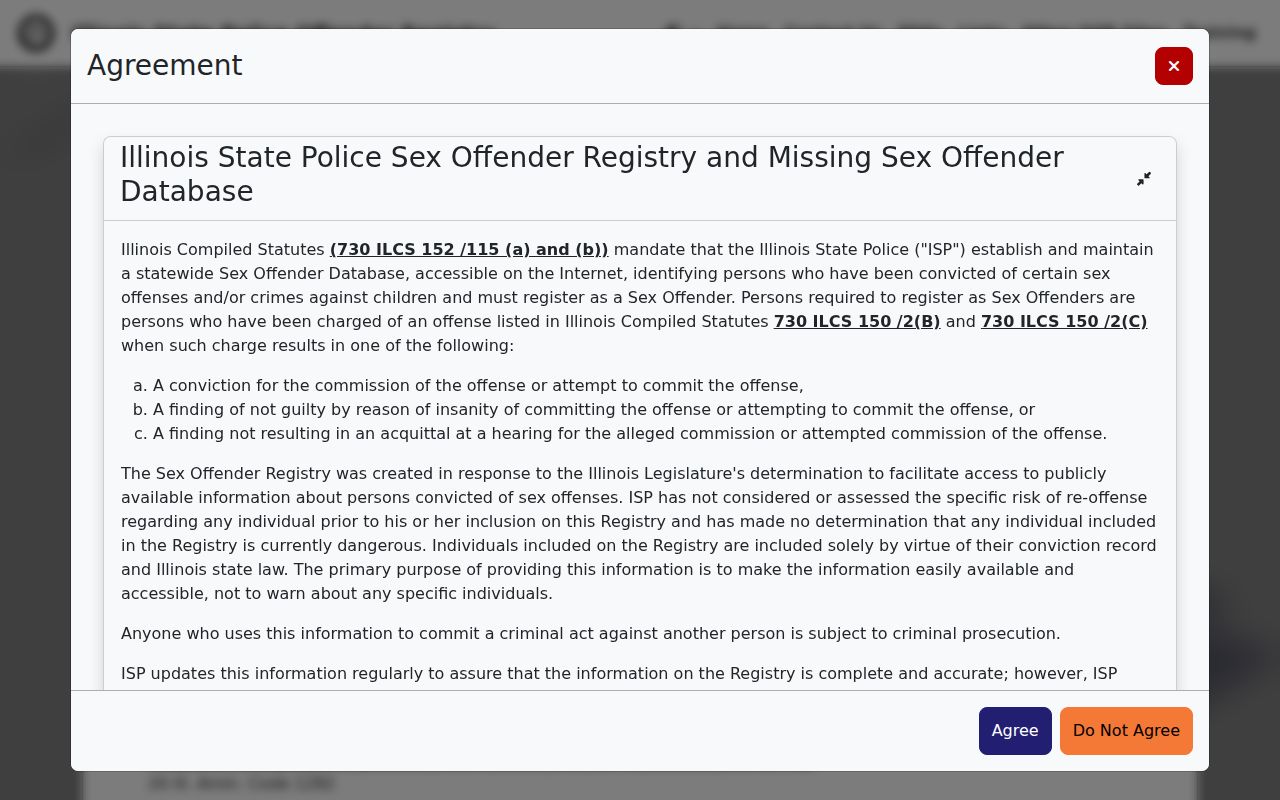
That caution matters most when a map pin is close to a school, park, workplace, or a boundary that may be interpreted incorrectly.
Inside a Registry Profile
A public profile brings identity, location, offense, and compliance information together, but fields vary by record. It is not a police narrative, complete criminal history, or live surveillance tool. Protected information about victims is not displayed, and the listed offense should be read as the registration basis rather than a summary of every case event.
| Name & Aliases | Primary name and reported alternate names used to distinguish records. |
|---|---|
| Photo & Physical Description | Photograph plus descriptors such as sex, race, height, weight, hair, eyes, and identifying marks when available. |
| Registered Address | Reported residence, employment or school information when publicly displayed; homeless records may not have a standard street address. |
| Offense & Statute | Qualifying offense description, statute, conviction location, and case-related dates as entered. |
| Registration Term | Ten-year or lifetime duty and any applicable designation, not a universal numbered tier. |
| Registration Status | Labels may include compliant, noncompliant, incarcerated, out of state, or other current database status. |
What a Registry Photograph Does Not Prove
A photograph helps distinguish people with similar names, but it does not show present location, current conduct, or whether a person poses an immediate threat. Image dates and appearance can differ. Match multiple descriptors and contact law enforcement when a safety concern requires current confirmation rather than attempting direct contact.
The ISP Offender Registration Unit explains the state registration program and agency role.
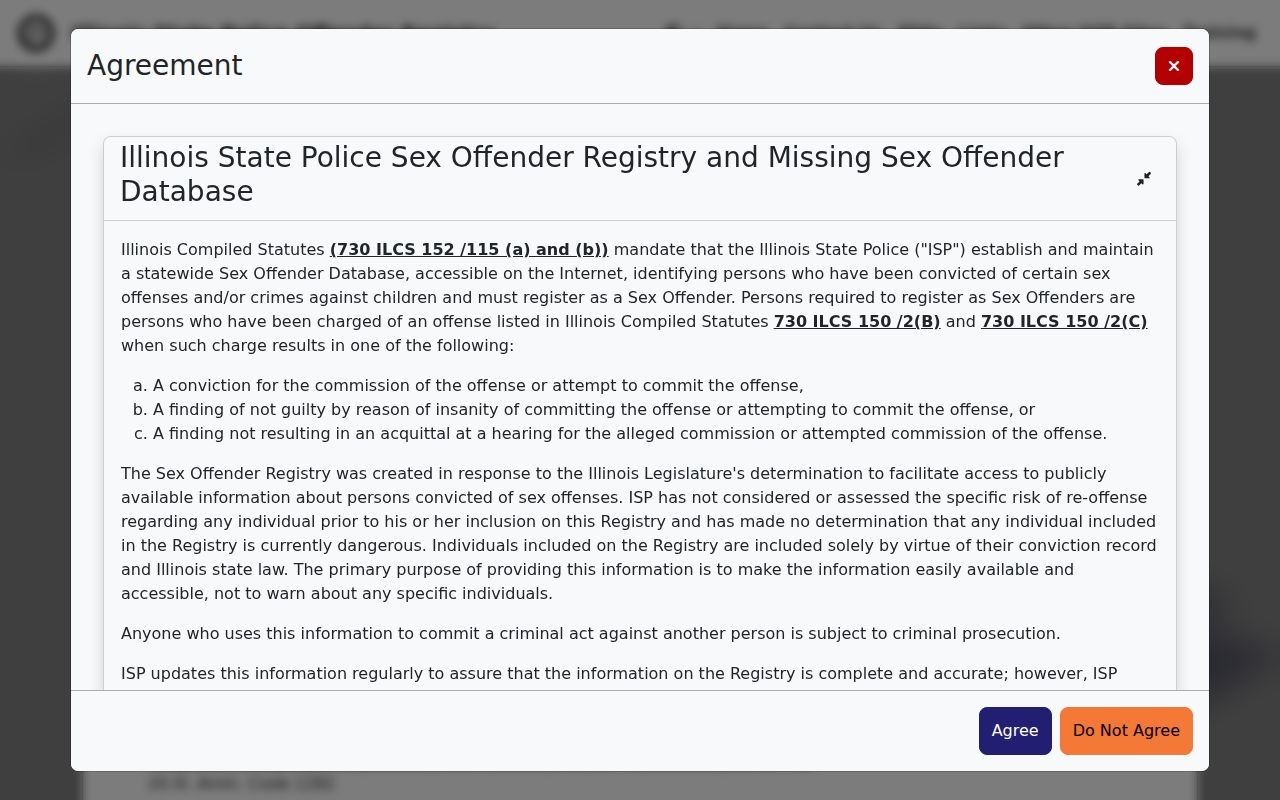
The source unit, not a copied profile elsewhere, is the proper route for program details or correction questions.
Illinois Registration Levels and Requirements
Illinois should not be reduced to a simple public Tier 1, Tier 2, and Tier 3 model. Duties depend on the qualifying offense and statutory designation. Common public distinctions include a ten-year registration period, lifetime registration for specified categories, and more frequent reporting for people designated sexually dangerous or sexually violent. Changes of address, employment, or school can trigger prompt reporting duties, and noncompliance can extend a ten-year term.
| Level / Tier | Duration | Verification Frequency |
|---|---|---|
| Ten-year registrant | Ten years, subject to statutory calculation and extensions | Generally annual, plus required change reporting |
| Lifetime registrant | Natural life | Generally annual or more often when a designation requires it |
| Sexually dangerous / violent designation | As required by the governing designation | Often every 90 days under Illinois requirements |
Ten-Year and Lifetime Duties Compared
The registration clock is not safely calculated from a conviction date alone. Custody, release, later adjudications, and periods of noncompliance can affect the endpoint. A profile's displayed term is a starting point; a person reviewing their own duty should obtain the source registration information and legal advice rather than infer an end date from a web result.
The Illinois Sex Offender Registration Act contains the governing duties and duration rules.
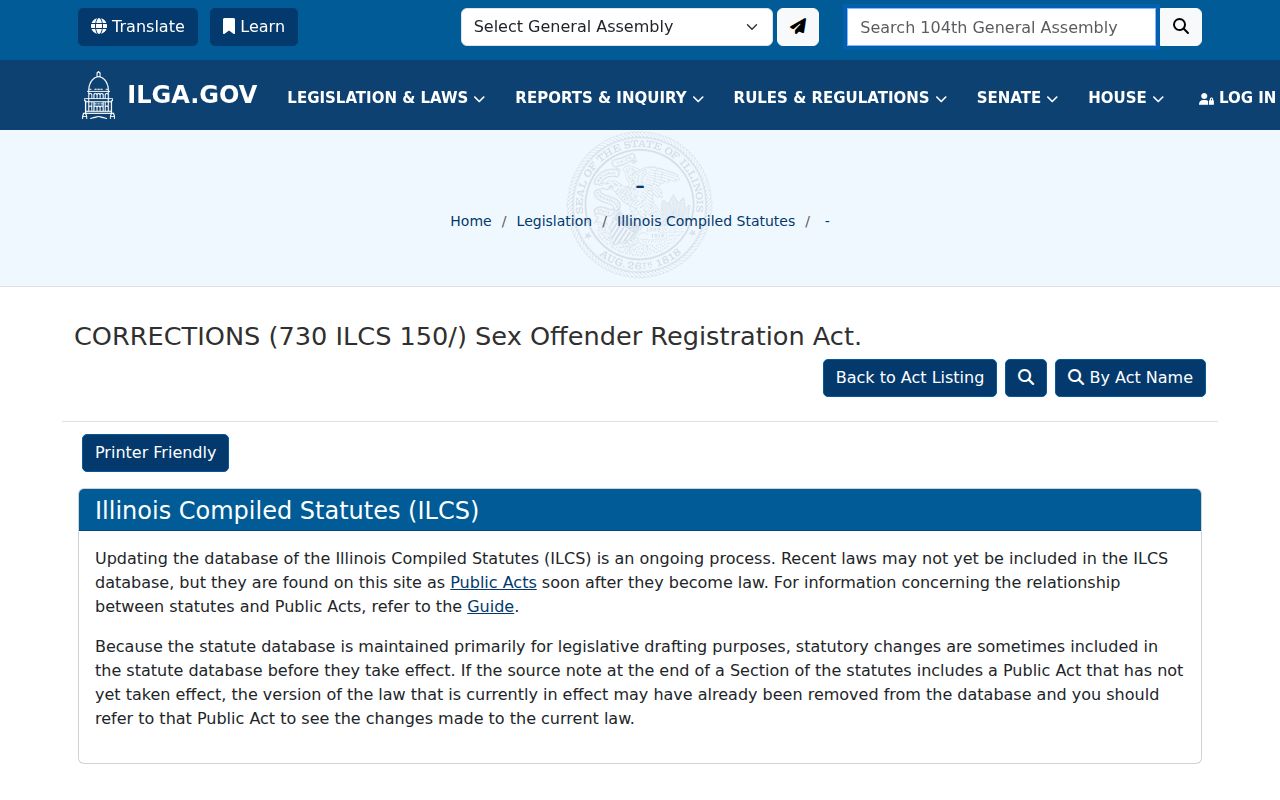
The statutory text also shows why a three-tier shortcut can obscure the actual Illinois categories.
NSOPW Versus Illinois I-SORT
I-SORT is the direct Illinois source for Bond County filters, profile details, and state status labels. The National Sex Offender Public Website searches participating jurisdictions across state and tribal lines, which is helpful when a person has moved or a search extends beyond Illinois. Differences between results should prompt a check of the originating jurisdiction, not an assumption that one entry is false.
The National Sex Offender Public Website is the federal cross-jurisdiction search channel.
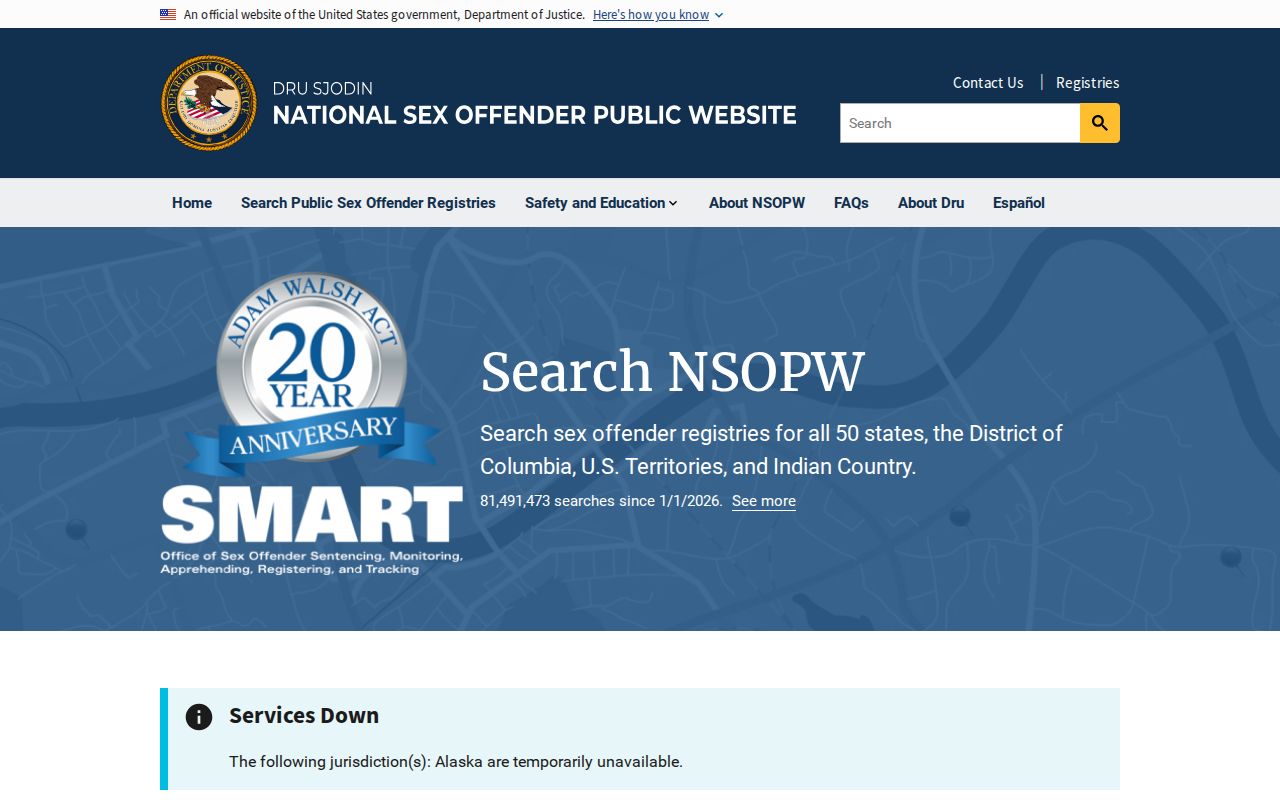
For a location in Bond County, return to I-SORT for the Illinois record and current state-specific detail.
Community Notification and Lawful Use
Registry information is published for community awareness and safety planning. It should be used to understand reported locations, discuss age-appropriate precautions, and contact the proper agency with a concrete concern. It should not be used to confront a registrant, spread an unverified accusation, or punish household members. Emergency threats belong with 911; routine registration questions can be directed to the registering law-enforcement agency or ISP.
The Illinois Sex Offender Community Notification Law defines the public-information framework.
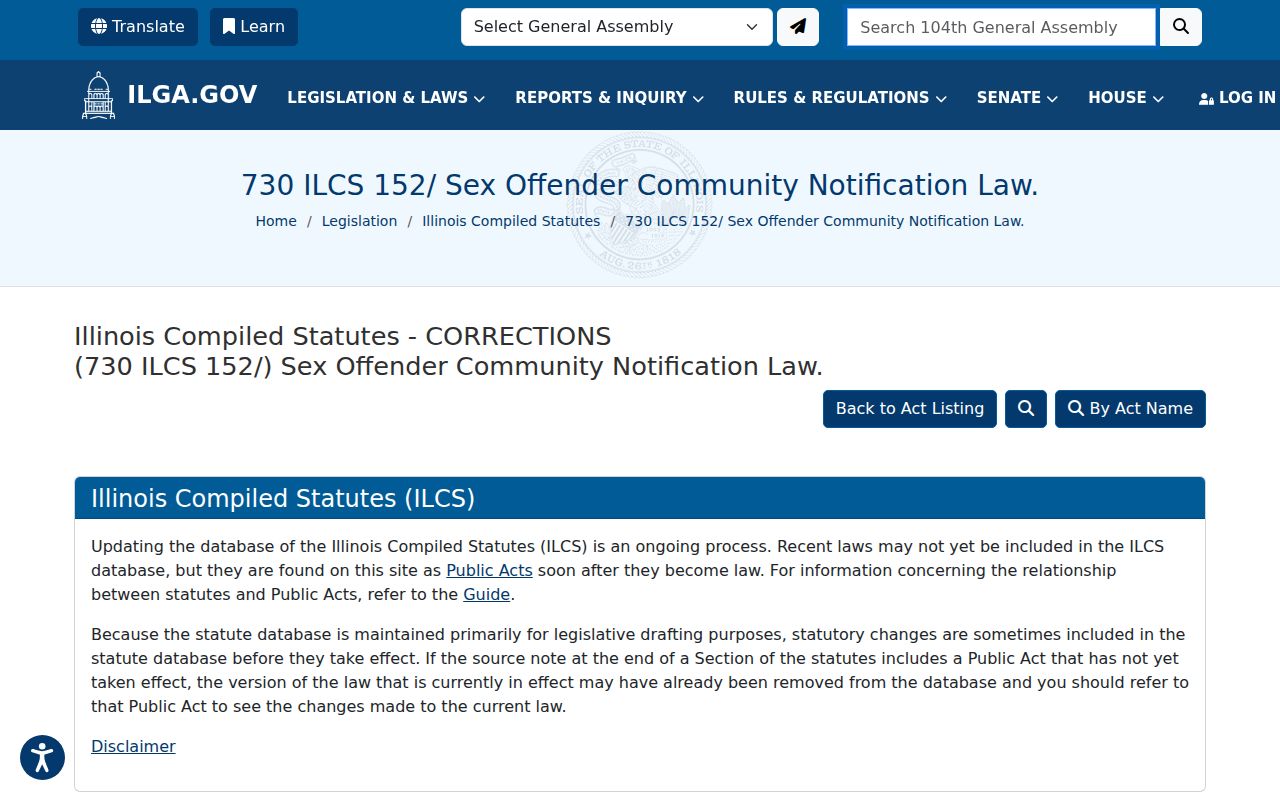
Its public-safety purpose does not authorize harassment or misuse of personal information.
Use registry information lawfully: Illinois registry information may not be used to harass, threaten, intimidate, or commit a crime against a registrant or household. Do not use a registry result for discrimination or any decision the law does not permit.